

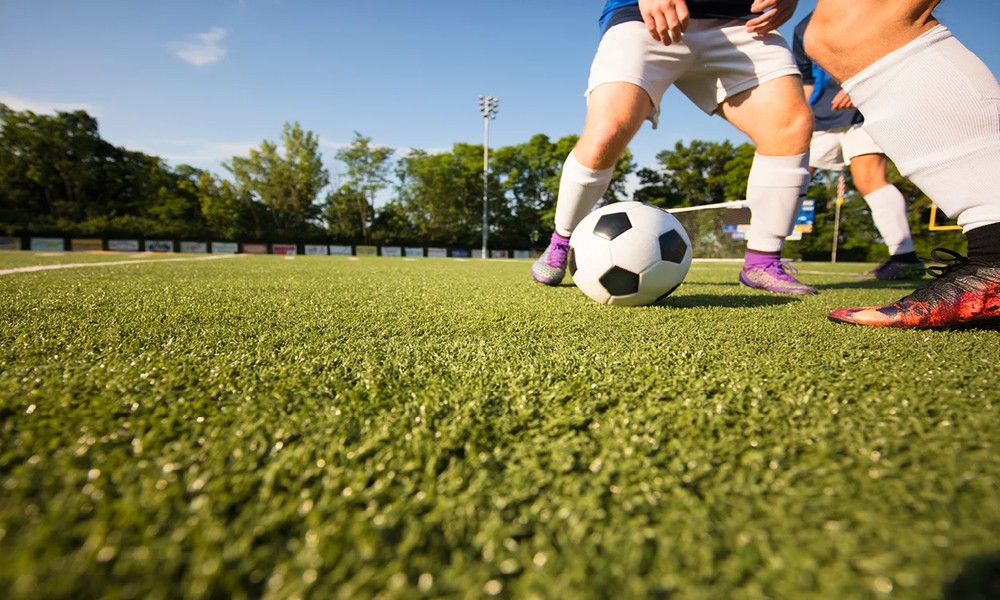
Built for Demanding Schedules
High-use soccer facilities need a surface that can support far more than weekend match play. Community clubs, schools, councils and training venues often rely on the same field for junior programs, senior training, school sport, holiday clinics and competitive fixtures. When usage levels are high, natural grass can struggle to recover, particularly in goal mouths, centre corridors, warm-up zones and other areas that experience repeated foot traffic.
This is why artificial grass for soccer needs to be viewed as a complete sports surface system, rather than a simple replacement for natural turf. A suitable surface must support consistent play, withstand regular use and remain available across different seasons and weather conditions. For facility owners, the right surface can help increase playing hours, reduce downtime and create a more reliable environment for players and coaches.
Consistency Across the Field
Soccer depends on predictability. Players need to trust how the ball will roll, how the surface will respond underfoot and how it will perform during sudden changes of direction.
Inconsistent surfaces can disrupt the flow of play and affect confidence, particularly during training drills, match situations and high-intensity competition.
A well-designed artificial soccer surface supports a more consistent playing experience across the full field. This is especially valuable for high-use venues where the surface must perform for different age groups, skill levels and playing styles. From passing accuracy to sprinting and tackling, the surface should allow players to focus on the game rather than adjusting to poor field conditions.
Durability Where It Counts
High-use facilities place concentrated pressure on specific parts of the field. Goal areas are exposed to repeated movement from goalkeepers and attacking players. Midfield zones absorb constant running and turning. Sidelines and entry points often wear quickly because of player, coach and spectator movement. A suitable artificial grass for a soccer system needs to be durable enough to manage this demand without compromising playability.
Durability is not only about how long the turf lasts. It also affects player safety, ball performance and maintenance planning. A surface that holds its structure over time can help maintain reliable traction and reduce the risk of uneven or worn areas becoming a problem. For councils, schools and clubs, this makes long-term performance a critical part of the selection process.
Designed as a Complete System
The visible turf layer is only one part of a soccer field. Base construction, drainage, shock absorption, infill selection and installation quality all influence how the surface performs. If these elements are not designed together, the field may not deliver the consistency or durability required for heavy use.
A high-quality artificial soccer facility should be planned around the intended level of use from the beginning. This includes understanding how many hours the field will be used, what standard of competition it needs to support and what maintenance resources will be available after installation.
Supporting More Play, More Often
For growing communities, field availability is often one of the biggest challenges. Artificial grass for soccer can help venues support more training sessions, more matches and more participation throughout the year. When selected and installed properly, it provides a reliable platform for high-use environments and helps clubs, schools and councils get greater value from their sports infrastructure.
