

How does street hockey operate?
Street hockey does not get organised. It just happens. Someone drags a net onto the road, word travels half a block, and within twenty minutes there are eight people playing who have never been formally introduced. Brent Polischuk has observed that the most durable neighbourhood bonds often begin in exactly these kinds of unplanned moments, where participation requires nothing more than showing up. The social character of street hockey is immediate and hyperlocal in a way that arena programmes are not built to replicate. Brent Polischuk notes that the absence of formal structure removes every barrier that organised sport tends to place between a resident and involvement. A game draws from whoever is physically nearby, which means two people who have lived three houses apart for four years without exchanging more than a nod can find themselves arguing calls together on a Tuesday evening. That specific kind of contact, unrequested and unscheduled, plants something that formal registration processes rarely manufacture on their own.
Why does arena hockey differ?
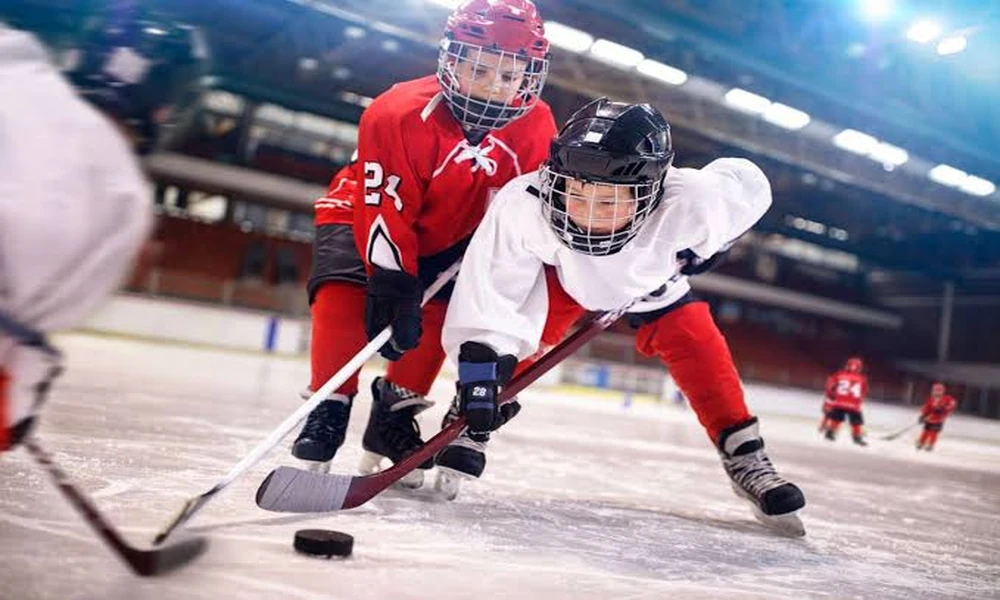
Arena hockey offers not quickness, but accumulation. The same families show up at the same building on the same evenings across five or six months. That repetition does social work that a street game, however enjoyable, cannot sustain long enough to produce. A parent who manages a team does not just attend games. She spends a season in regular contact with other families, handling logistics, solving small problems, and building familiarity through shared responsibility rather than shared geography.
Arena hockey’s registration cycles, volunteer requirements, scheduled ice times, and league operations create a framework that street hockey deliberately lacks. That framework allows arena programmes to generate deeper and more durable relationships. People do not drift in and out like on a street. Commitment to a season means repeated contact. Repeated contact across months produces something that an afternoon game, even an excellent one, does not have enough time to build.
Street vs arena comparison
Neither format is more valuable in absolute terms. What separates them is the kind of community each builds and how long it lasts once the game ends.
- Street hockey generates the first layer of neighbourhood connection, casual familiarity between residents who share a street but have not yet found a sustained reason to interact. It is low-barrier, spontaneous, and accessible to anyone regardless of experience or commitment level. The bonds it creates are real but tend to remain at the surface without anything to deepen them over time.
- Arena hockey is responsible for what comes after that first layer. Volunteer networks, cross-generational relationships, and shared seasonal histories accumulate inside a programme in ways that a street game spread across different afternoons with different participants never quite replicates. A neighbourhood relying only on street hockey for its social fabric will find genuine warmth there. However, it will lack the kind of infrastructure that sustains community life through years rather than seasons.
Which builds community better?
- Street hockey introduces people to each other.
- Arena hockey gives them a chance to explore after that introduction.
A neighbourhood with both operating at the same time does not face a choice between the two formats. Instead, it benefits from what they do at a different stage of community development. The resident who first picks up a stick on his street on a summer evening and the same resident who coordinates his third season as a league volunteer four years later have both been shaped by hockey, just by varying versions of it at different points.
Community does not usually arrive through a single channel. In neighbourhoods where hockey is genuinely embedded in daily life, the street game and the arena programme are rarely competing with each other. One draws people out. The other keeps them engaged across years. What gets built through both, quietly and without much formal intention, is a neighbourhood that knows itself better than it did before the first puck dropped.
