

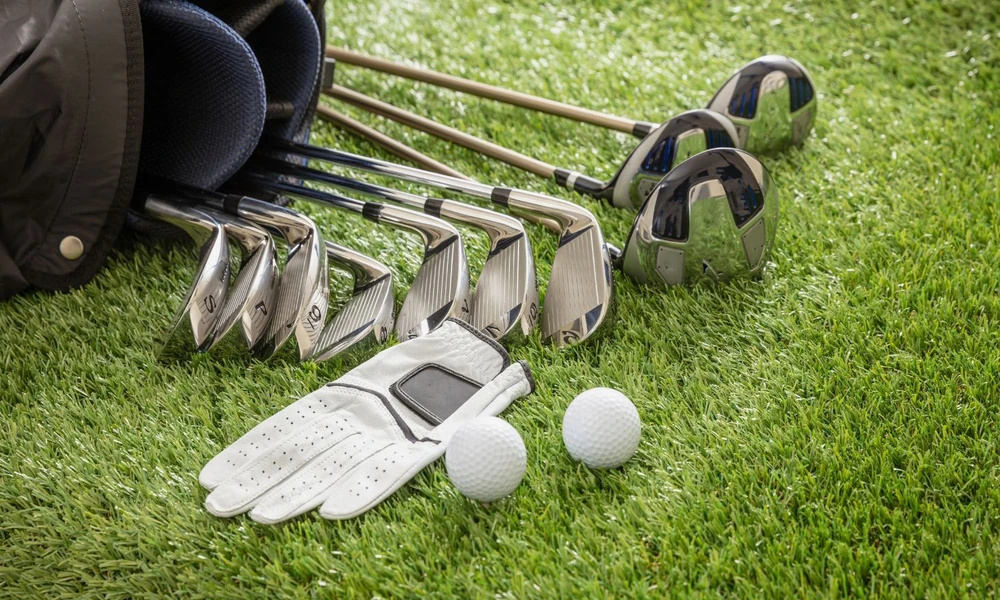
Golf clubs come in five categories, and each one handles a specific part of the course and a specific kind of shot. New players picking up their first golf clubs set find woods, hybrids, irons, wedges, and a putter in the bag. Each category covers a distance range and shot type that the others are not built for, and knowing which club belongs where makes club selection straightforward from the first hole onward. The sections below cover the distance clubs first and the scoring clubs after.
Club category overview
Woods are the longest clubs in the bag, numbered from one upward with the driver at number one. There are usually a number of irons in most golf bags, ranging from long approaches to short irons near the green. Arguably, irons are the most commonly used club group. Players can gain wood distance while swinging an iron swing with the hybrid, which is located between woods and irons. The wedge loft ranges from low to high, covering pitch shots, chip shots, and bunker shots below one hundred yards.
Distance club types
• Driver – The driver sits at nine to twelve degrees of loft and carries the ball further than any other club in the bag. The majority of players use it for tee shots on par fours and par fives, where distance is of the utmost importance, and most beginners carry one driver for tee shots only.
• Fairway woods – Three woods and five woods cover roughly one hundred and eighty to two hundred and thirty yards, depending on swing speed. Their rounded sole moves through fairway grass cleanly without digging, so players use them from both tee boxes and fairway lies with equal confidence.
• Hybrids – Hybrids replace the three and four irons for most club golfers because a wider sole and lower centre of gravity make clean contact easier across a range of lies. With a hybrid, the ball lands higher and softer than with a long iron, which helps it hold the green on longer approach shots.
Short game clubs
Short game clubs cover everything from one hundred yards inward to the hole itself. Typically, four to seven irons are used for shot distances ranging from 100 to 170 yards. The loft of these irons is high enough to produce a reliable flight for most players. During scoring holes, eight and nine irons are better suited for eighty to one hundred and thirty-yard ranges with higher lofts and shorter shafts. The wedges cover the four distance bands below one hundred yards, starting with pitching wedges, moving through gap wedges, sand wedges, and lob wedges, each adding loft as it reduces carry distance. A player who carries all four wedges has a reliable full swing option for every yardage window from one hundred yards down to forty yards, which removes the need for awkward partial swings that introduce more variation than the short game can handle.
Golf clubs divide into five categories that together cover every shot from the tee to the hole. Woods and hybrids carry the ball from the tee to the fairway and from the fairway to the approach range. Irons cover the middle distances from one hundred and seventy yards inward. Wedges handle the short game across four loft options for every scoring situation. The putter closes every hole at a controlled pace and direction. Knowing which category fits which situation gives every golfer a clear and reliable system as they play from the first tee shot to the final putting stroke on the last green.
